
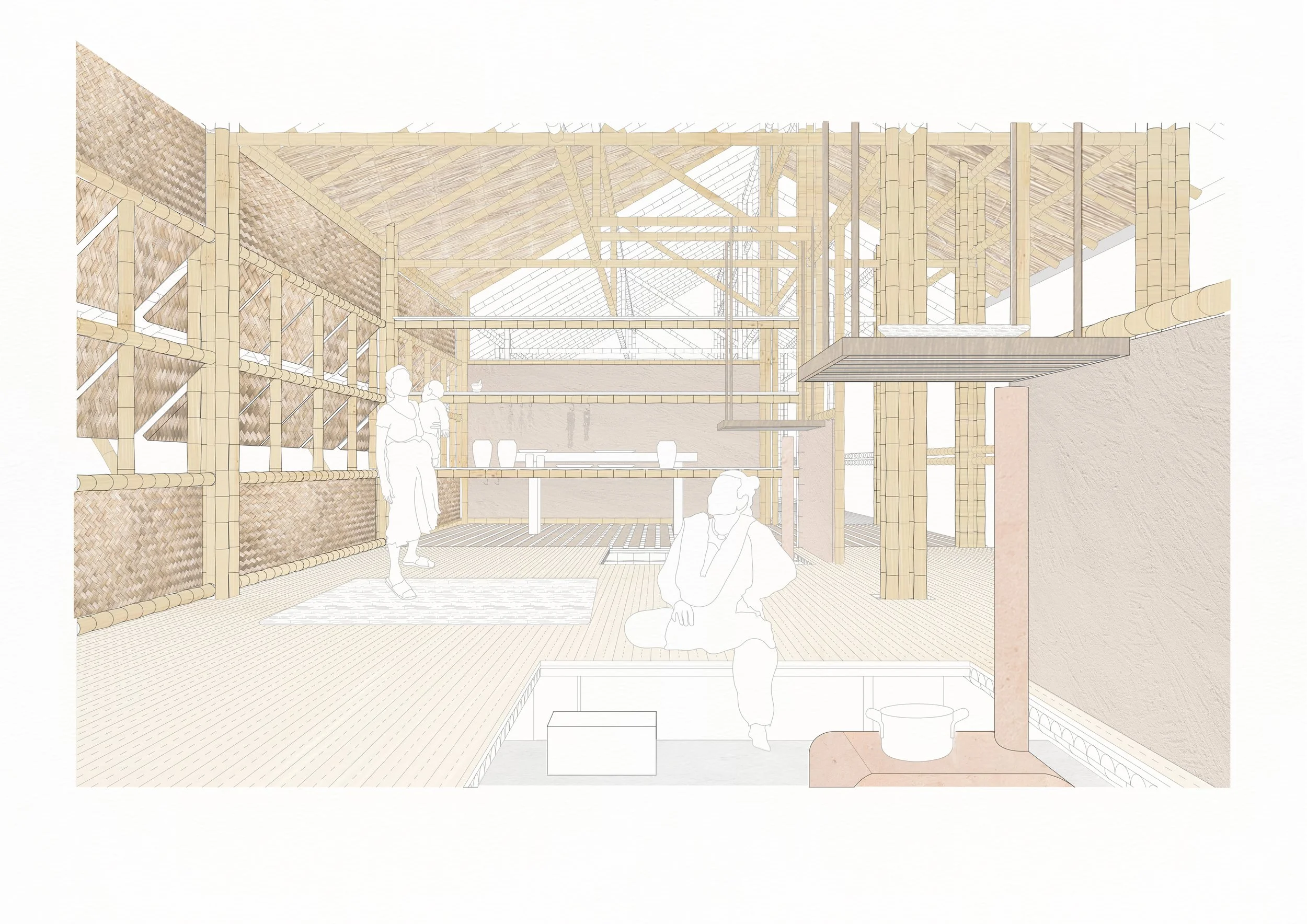
The Edge of Extraction
Assam, India
MA School of Architecture Oslo
2026
The Assam tea plantation is an enduring spatial system shaped by colonial extraction, where estates have historically controlled land, production, and workers’ housing. Generations of workers have lived within these settlements without formal land rights.
Recent policy shifts proposing redistribution of residential land to tea workers signal a major transition, yet the spatial implications remain unclear due to limited formal data and uncertain boundary definitions.
The project works within this ambiguity, using GIS mapping combined with manual tracing to construct speculative spatial readings where official datasets are incomplete. These gaps are treated as generative, opening up new ways of understanding territory and settlement.
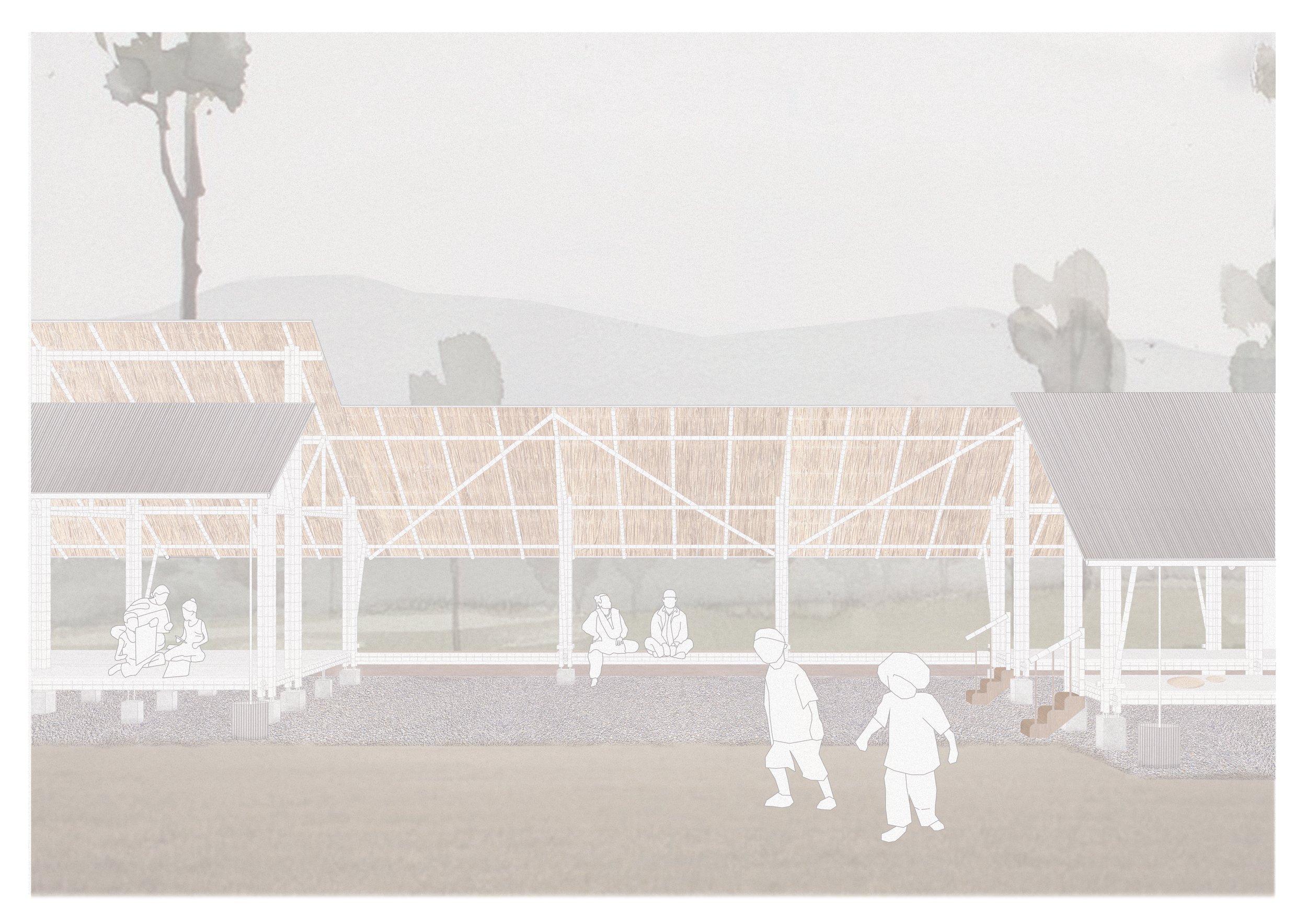
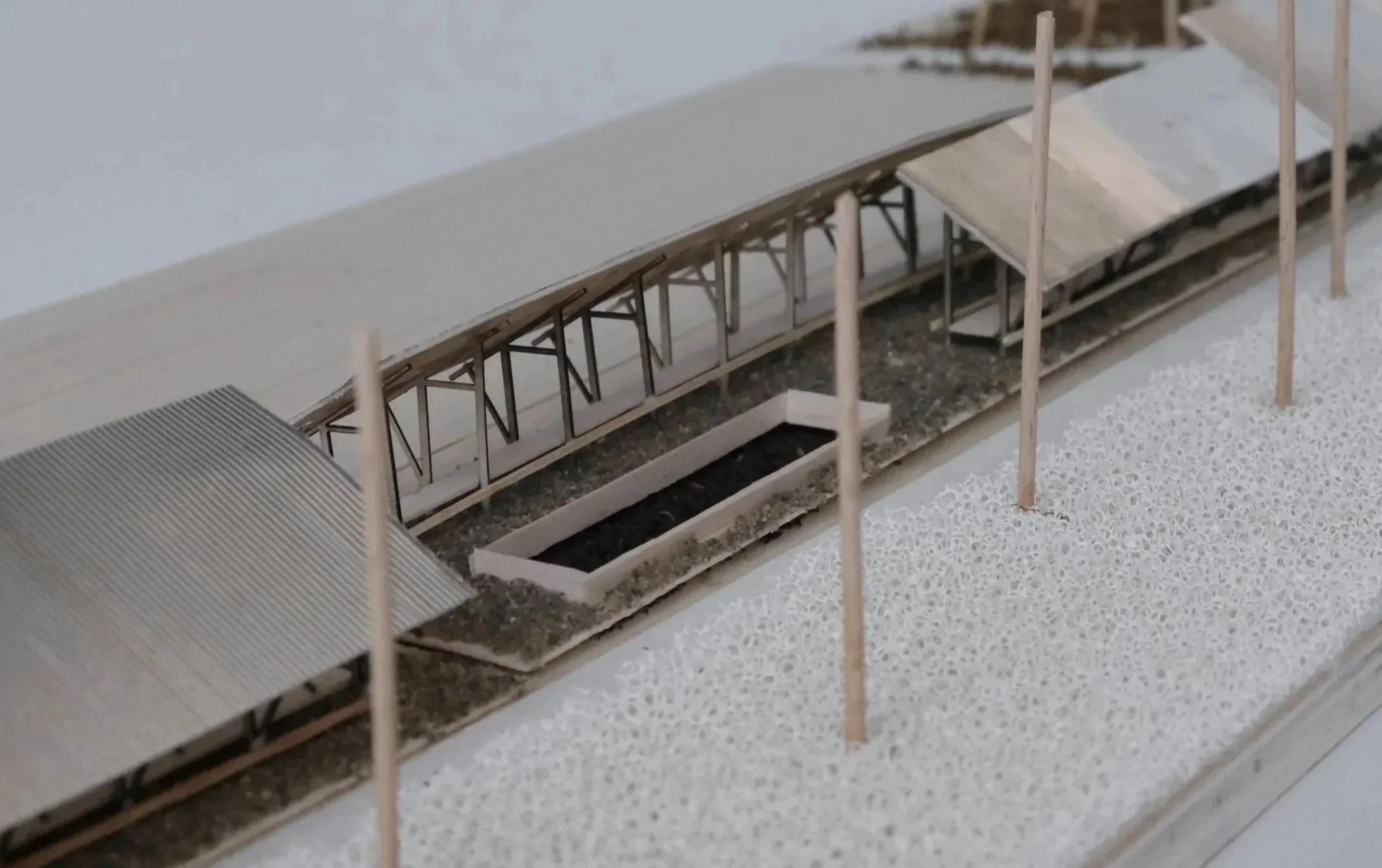
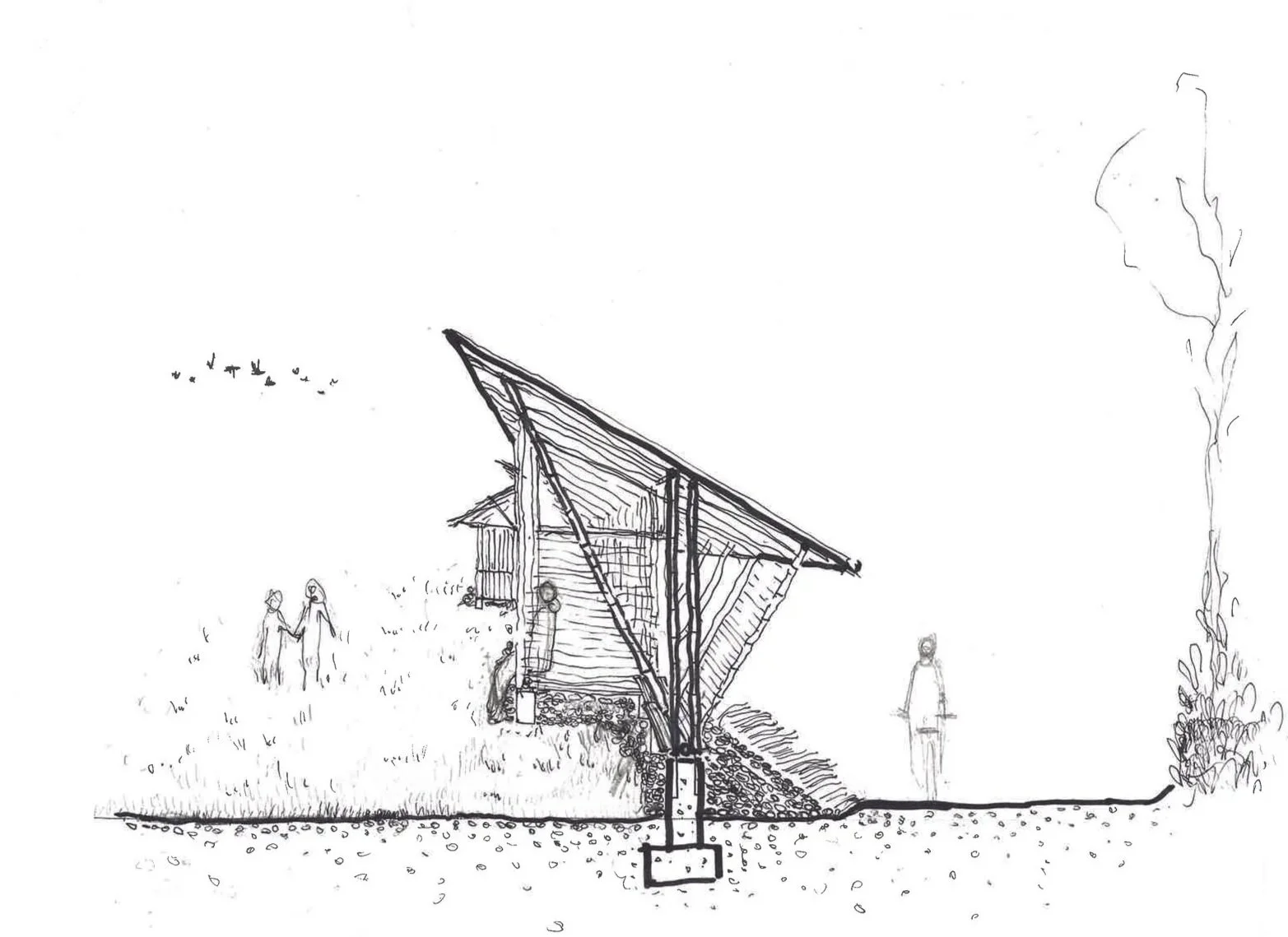
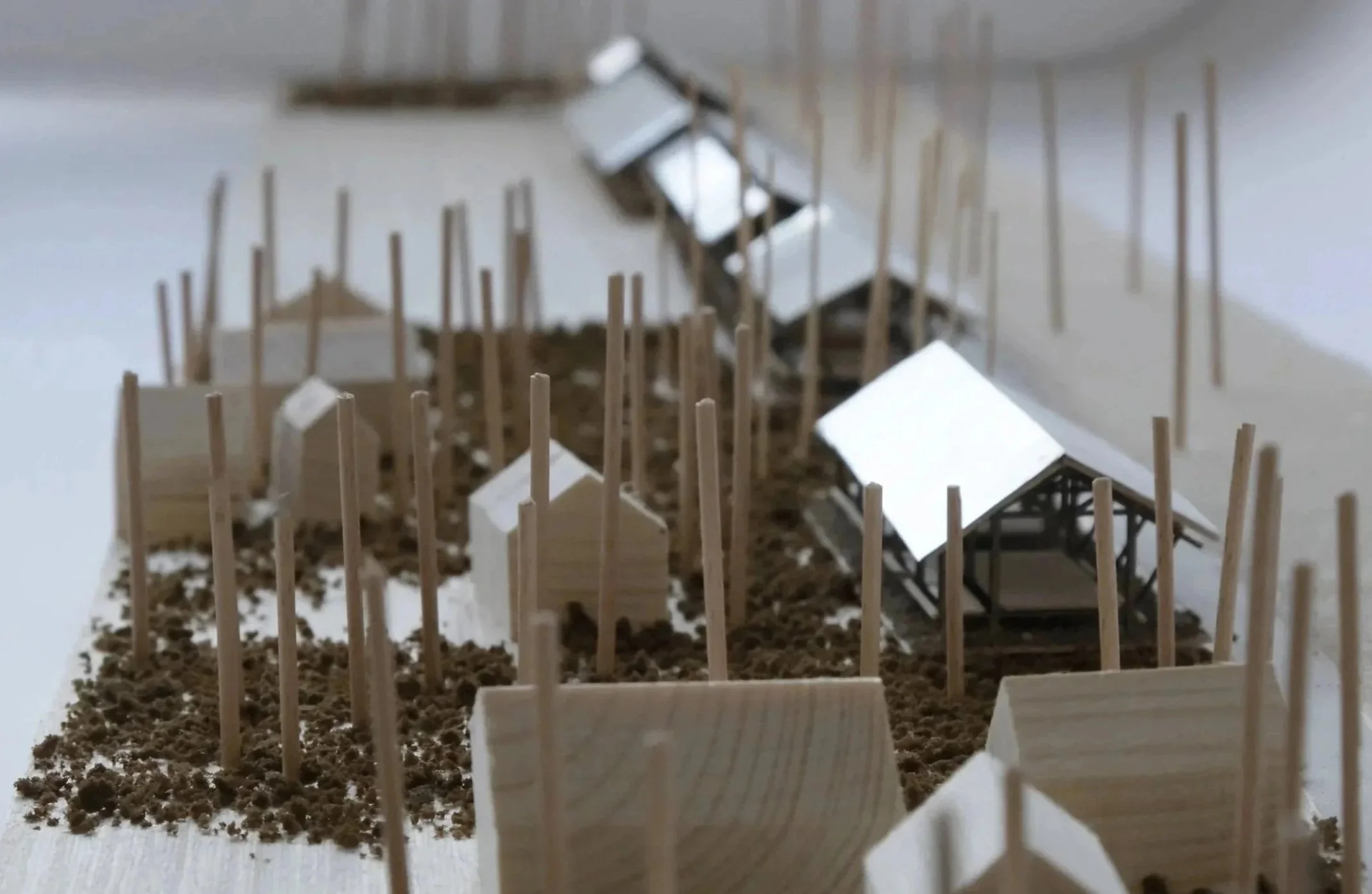
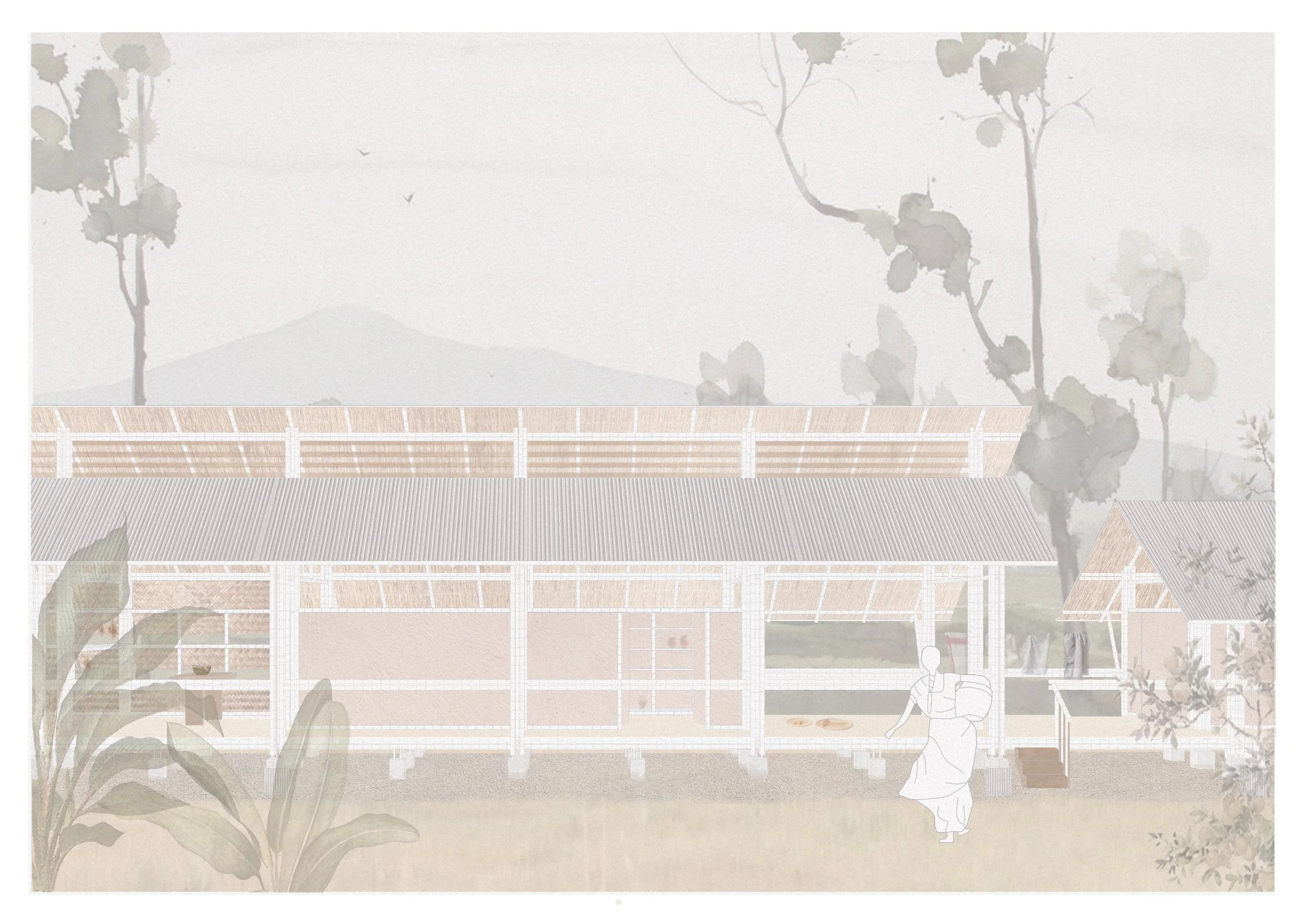
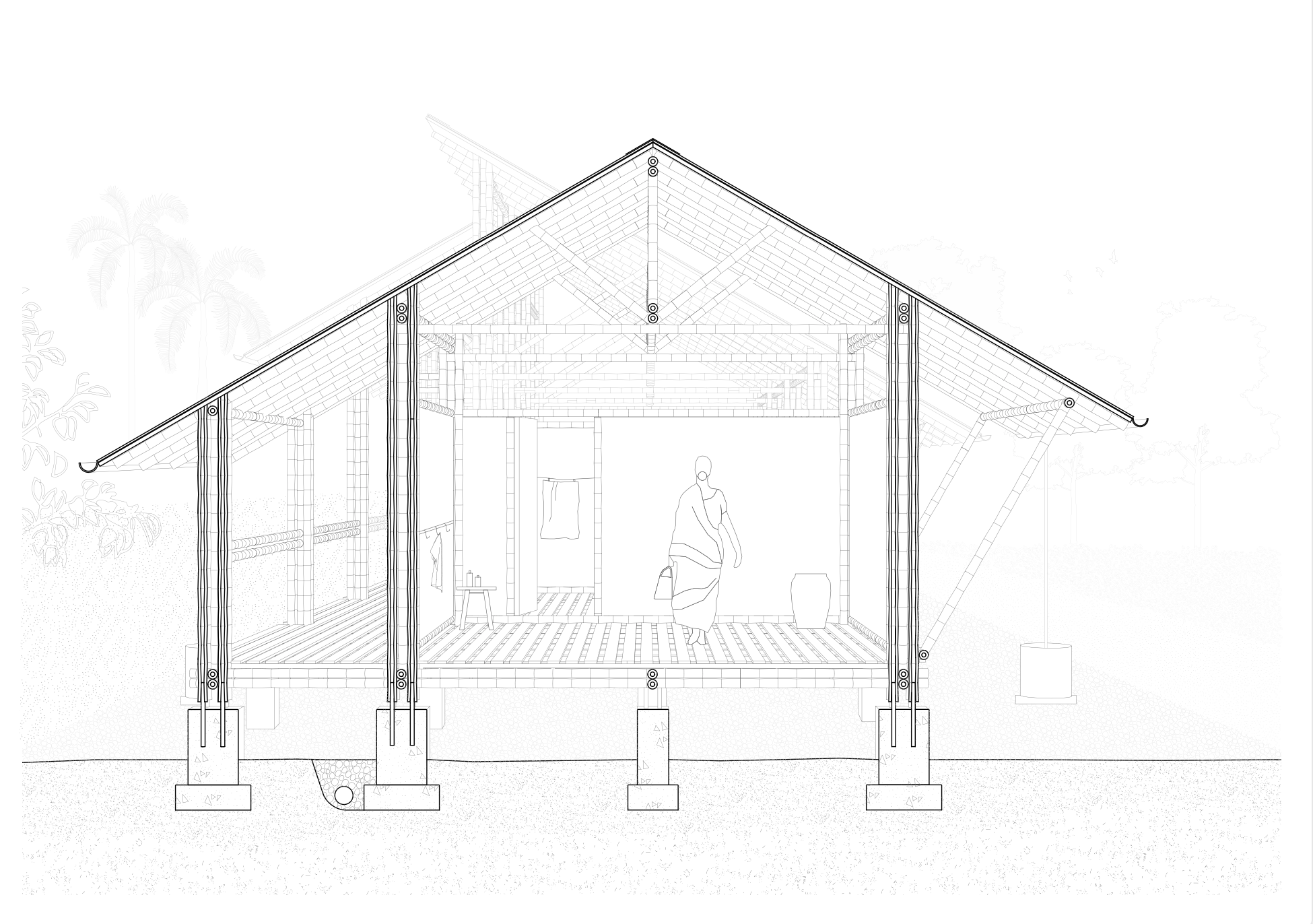
It proposes bamboo-based self-build systems as an accessible, locally rooted construction method that enables incremental, collective building. Centering women’s spatial agency, the project explores how shared bamboo infrastructures can support new forms of autonomy, care-based economies, and communal use during this transition.
The work frames architecture as a participatory, spatial practice emerging from material knowledge, resource autonomy and changing land relations.